What Is Pluto Time and Why It's Different
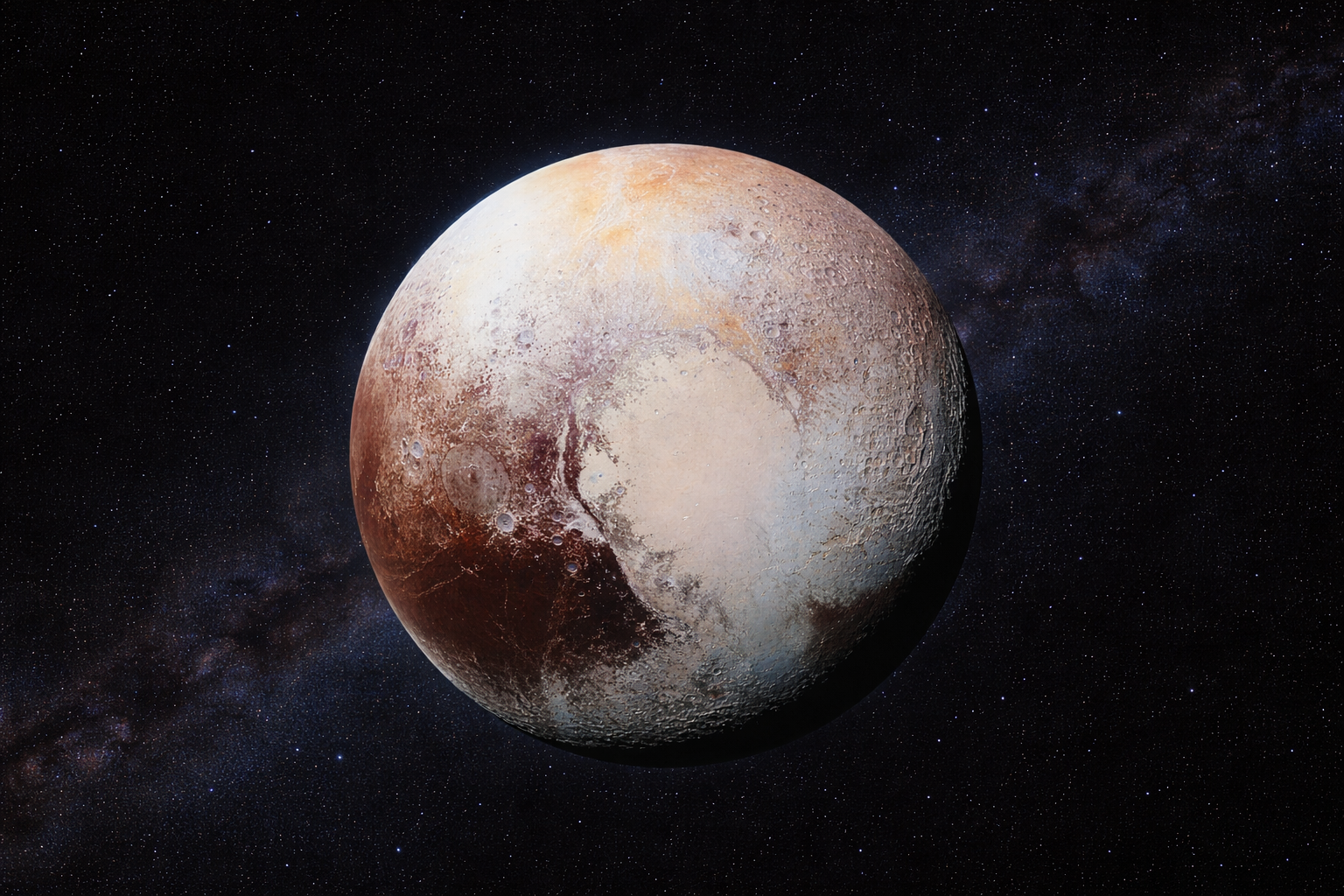
Pluto time refers to the unique way time passes on the dwarf planet
Pluto, which is vastly different from Earth due to its distance from
the Sun and its slow rotation. Located in the outer reaches of our
solar system in the Kuiper Belt, Pluto takes approximately 248 Earth
years to complete just one orbit around the Sun.
This means that if you were born on Pluto, you would celebrate your
first birthday after 248 Earth years! A single Pluto day, known as a
"Plutonian day," lasts about 6.39 Earth days (153.3 hours), making it
significantly longer than our 24-hour day.
These dramatic time differences make Pluto a fascinating subject for
astronomers and space enthusiasts alike. Our Pluto Time Calculator
helps you visualize and understand these cosmic time scales in a fun
and educational way.
How the Pluto Time Calculator Works
Our Pluto Time Calculator uses accurate astronomical data to convert
Earth-based time measurements into their Pluto equivalents. The
calculator takes into account two key factors: Pluto's orbital period
(how long it takes to go around the Sun) and Pluto's rotational period
(how long a day lasts).
Converting Earth Years to Pluto Years
One Pluto year equals approximately 248 Earth years (more precisely,
247.94 Earth years). So if you're 30 years old on Earth, you would
be about 0.12 Pluto years old.
Converting Earth Days to Pluto Days
One Pluto day (sidereal day) is approximately 6.39 Earth days. This
means that 365 Earth days would be about 57 Pluto days.
Simply enter your Earth age, date of birth, or any number of Earth
days or years, and our calculator will instantly display the
equivalent Pluto time with detailed explanations.
Pluto vs Earth: Time Comparison
| Measurement |
Earth |
Pluto |
| Day Length |
24 hours |
153.3 hours (6.39 Earth days) |
| Year Length |
365.25 days |
90,520 Earth days (248 Earth years) |
| Days per Year |
365.25 days |
14,164 Pluto days |
| Season Length |
~3 months |
~62 Earth years |
These stark differences highlight just how alien time would feel on
Pluto compared to our experience on Earth. Understanding these
comparisons helps us appreciate the incredible diversity of our solar
system.
Why Use a Pluto Time Calculator
Whether you're a student learning about the solar system, a teacher
looking for engaging educational tools, or simply a space enthusiast
curious about cosmic time scales, our Pluto Time Calculator offers
valuable insights in an accessible format.
Educational Value
This calculator helps students grasp abstract astronomical concepts by
relating them to personal experiences like age and birthdays. It's a
powerful teaching tool that makes planetary science tangible and
memorable.
Fun for All Ages
Calculate your age on Pluto and share it with friends! It's a great
conversation starter and a fun way to explore the mysteries of our
solar system. Kids especially love discovering they would only be a
fraction of a Pluto year old.
Scientific Accuracy
Our calculator uses precise astronomical data from NASA and other
space agencies to ensure accurate conversions. The calculations are
based on Pluto's actual orbital and rotational periods as measured by
the New Horizons mission and ground-based observations.
Understanding Pluto's Orbit and Rotation
Pluto's unique time characteristics stem from its unusual orbit and
rotation. Unlike the major planets, Pluto follows a highly elliptical
orbit that is tilted 17 degrees relative to the plane of the solar
system.
Orbital Characteristics
Pluto's orbit is so elongated that at its closest point to the Sun
(perihelion), it's actually closer than Neptune at about 2.7 billion
miles. At its farthest point (aphelion), it reaches 4.6 billion miles
from the Sun. This 1.9 billion mile difference affects everything from
temperature to how the Sun appears from Pluto's surface.
Axial Tilt and Seasons
Pluto has an extreme axial tilt of 122.5 degrees, meaning it
essentially rotates on its side. This creates extreme seasonal
variations over its 248-year orbit. When one pole points toward the
Sun, it experiences continuous daylight for decades while the opposite
pole remains in complete darkness.
Synchronous Rotation with Charon
Interestingly, Pluto and its largest moon Charon are tidally locked to
each other. This means they always show the same face to one another,
much like how Earth's Moon always shows us the same side. From Pluto,
Charon would appear to hang motionless in the sky, never rising or
setting.